RIDGECOURSEROOFING Partner & general inquiries
Ridgecourse Roofing · Pre-Launch
Phoenix & East Valley, AZ · Not a Licensed Contractor · Educational field manual & Qualifying Party / partner intake only until active AZ ROC R-42/CR-42 licensure. AZ ROC lookup ↗

Phoenix & East Valley · Homeowner Field Manual

Built around the
layers you
don’t see.

Desert roof tiles can look intact from the curb while 20-year felt underlayment dries out beneath them. Learn how Arizona roof assemblies actually work—and audit competing written proposals line by line before work begins.

Superstition Foothills / Sonoran Desert Roofscape Illustrative architectural photography · No completed customer jobs shown

01 · Desert roof systems

What’s actually on—and
under—an Arizona roof?

The visible surface sheds sun and impact, while the underlayment and sheet metal underneath stop monsoon water. Open each system study for concrete questions to take to a licensed Arizona roofer. All images are illustrative architectural studies.

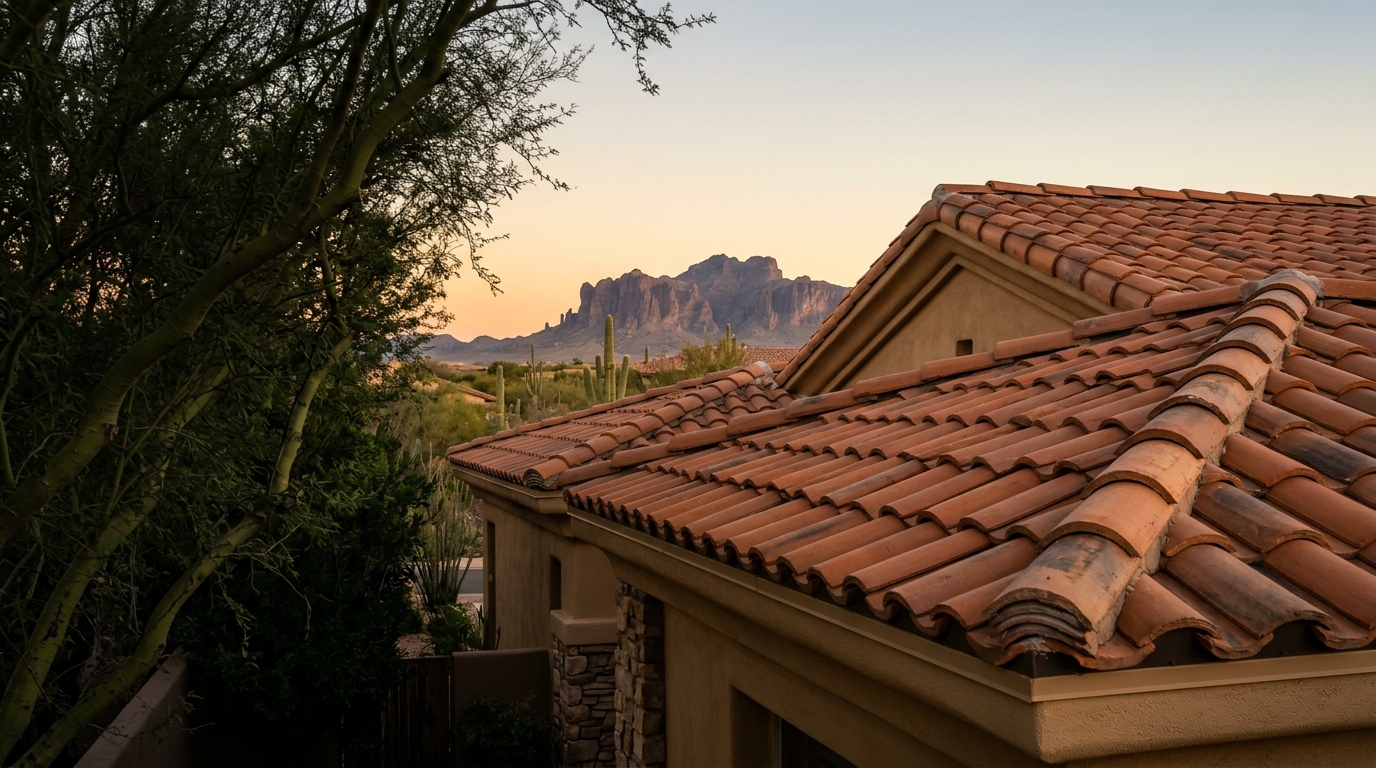
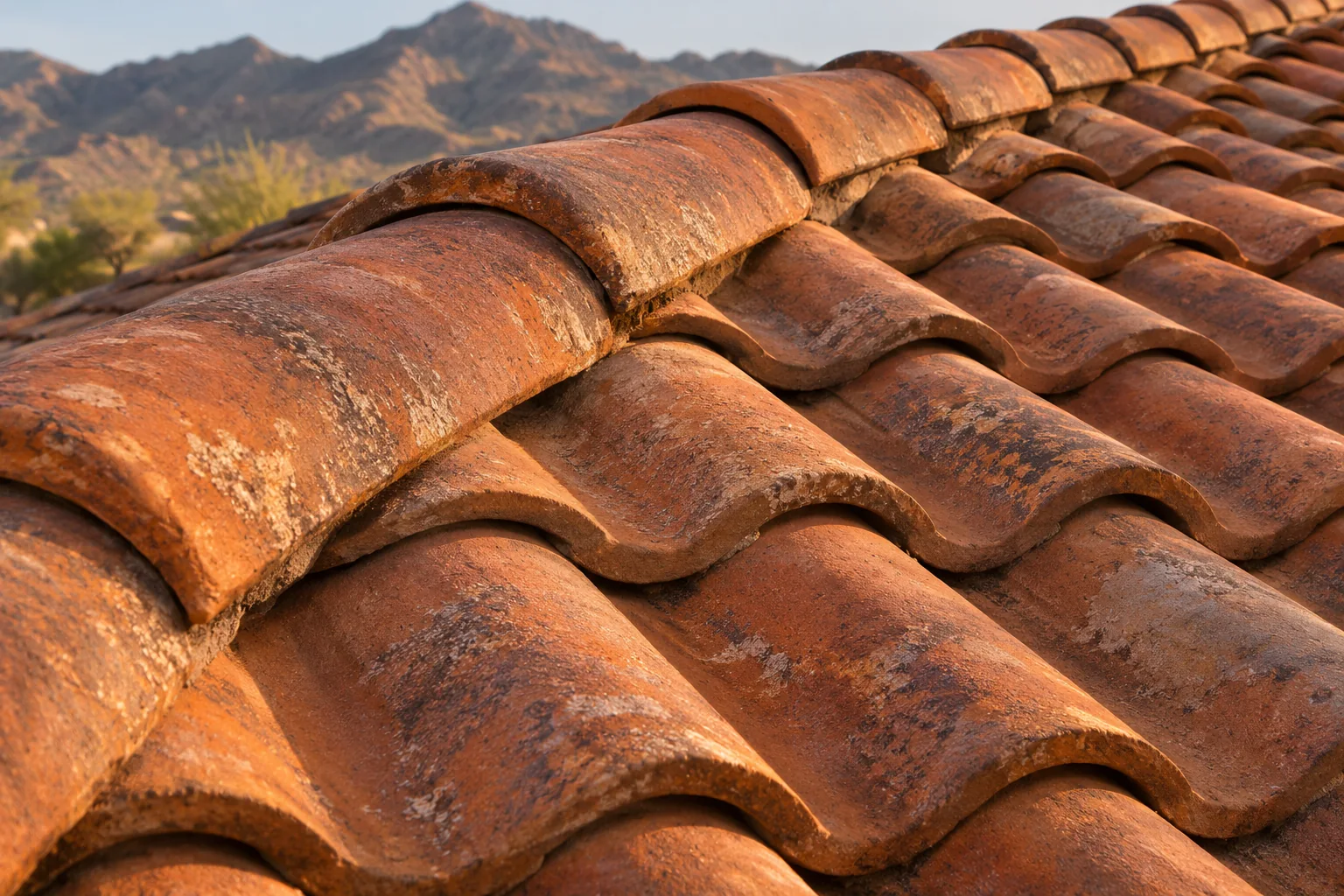
Curved terracotta clay tiles overlapping in clean horizontal courses beneath a rounded ridge cap.
Most common in East Valley
Concrete & clay S-tile / flat tileTypical underlayment cycle: 18–28 yrs

Clay & concrete tile roofs

Tiles frequently outlast the asphalt felt beneath them. A quote for swapping a few cracked tiles is fundamentally different from a full lift-and-relay that replaces dry, brittle underlayment, birdstop, battens, and valley metal.

Questions to ask on a tile bid
  • How many existing tiles are reused, what breakage percentage is included, and where are matched replacements sourced?
  • Is the underlayment single-ply, 2-ply 40-lb, or high-temperature SBS/synthetic rated for Phoenix deck heat?
  • Are new 1x2 treated battens, birdstop, and mortar or dry-vented ridge caps included in the base scope?
  • How is rotted OSB decking priced per sheet and documented before replacement?
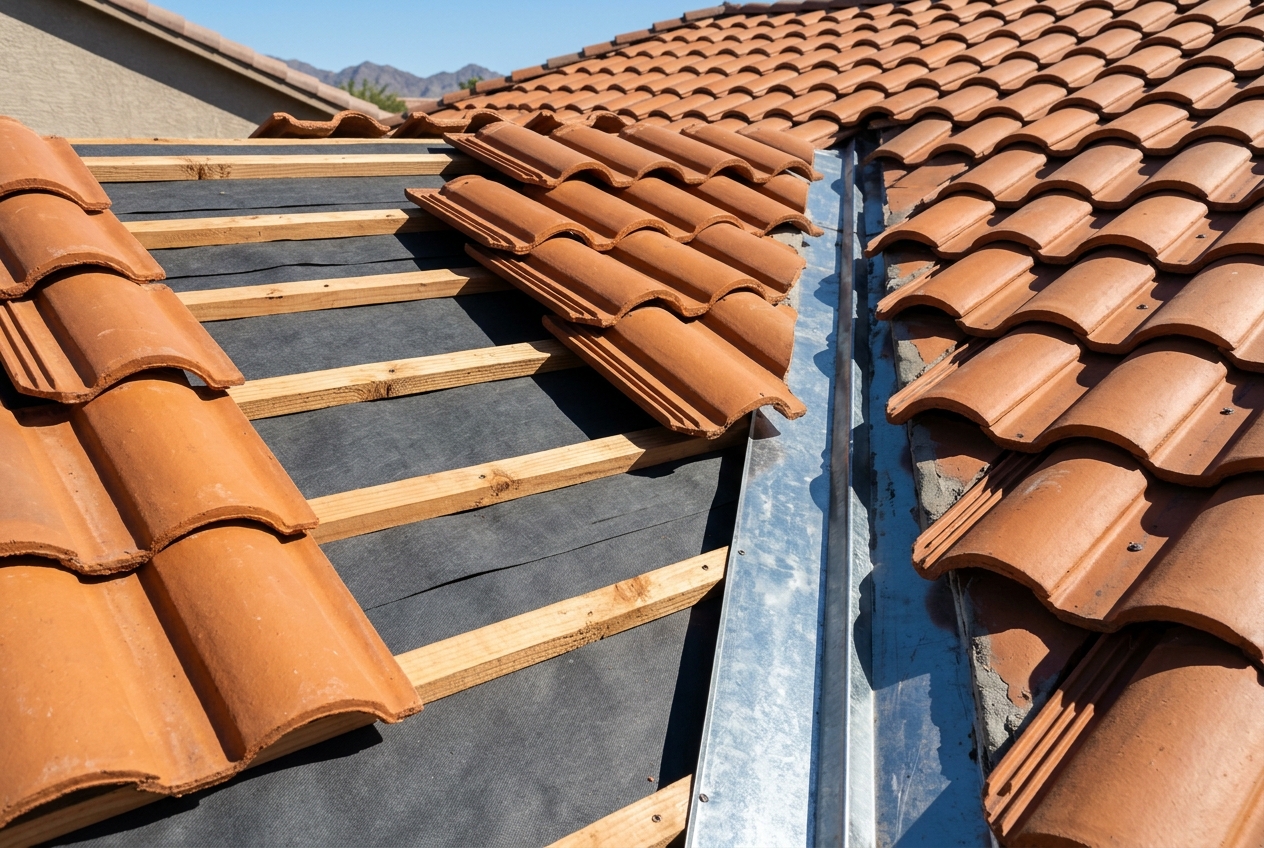
Close-up architectural assembly of terracotta roof tiles on horizontal wooden battens over charcoal synthetic underlayment meeting a galvanized W-profile valley flashing channel.
Primary monsoon failure zone
W-valley metal · Battens · Pipe bootsHidden waterproof barrier

Underlayment, battens & valley flashing

Most Phoenix monsoon leaks do not begin in the middle of an open field—they start where roof planes meet in rusted valleys, cracked lead or rubber pipe boots, stucco wall transitions, and clogged eave channels.

Questions to ask about hidden layers
  • Will existing valley metal be replaced with new 26-gauge (or heavier) W-profile flashing rather than reused?
  • Are all plumbing pipe jacks, exhaust vents, and wall counterflashings replaced rather than smeared with mastic?
  • Will the contractor photograph the bare wood deck and completed dry-in before tiles or shingles cover them?
  • Are underlayment head-laps and double-layer valley linings installed to manufacturer specifications?
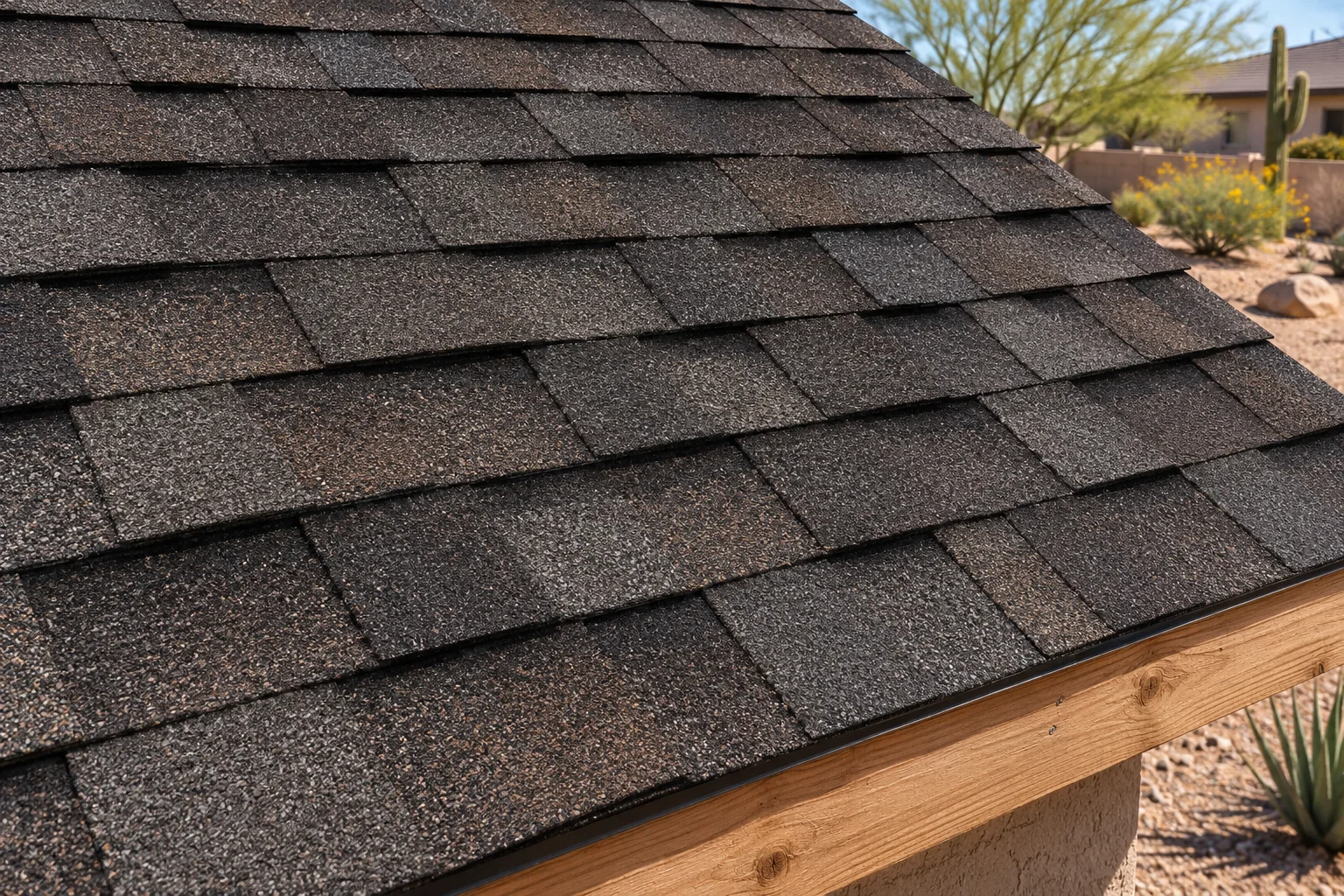
Staggered charcoal architectural asphalt shingles with textured mineral granules over clean wood fascia.
1–2 day crew turnaround
Class 3 / Class 4 laminated6-nail monsoon wind pattern

Architectural shingle roofs

Intense UV radiation and 150°F+ surface temperatures accelerate shingle granule loss and thermal brittleness. A solid proposal names exact shingle line, full tear-off to bare wood, starter strips, drip edge, and ventilation.

Questions to ask on a shingle bid
  • Does the price include full tear-off of all existing layers down to bare sheathing and roll-off disposal?
  • Which exact shingle line, starter strip, hip-and-ridge cap, and synthetic underlayment are specified?
  • Are shingles fastened with a 6-nail high-wind pattern for monsoon microburst uplift resistance?
  • How are intake soffit vents and exhaust ridge/static vents balanced so attic heat does not bake new shingles?
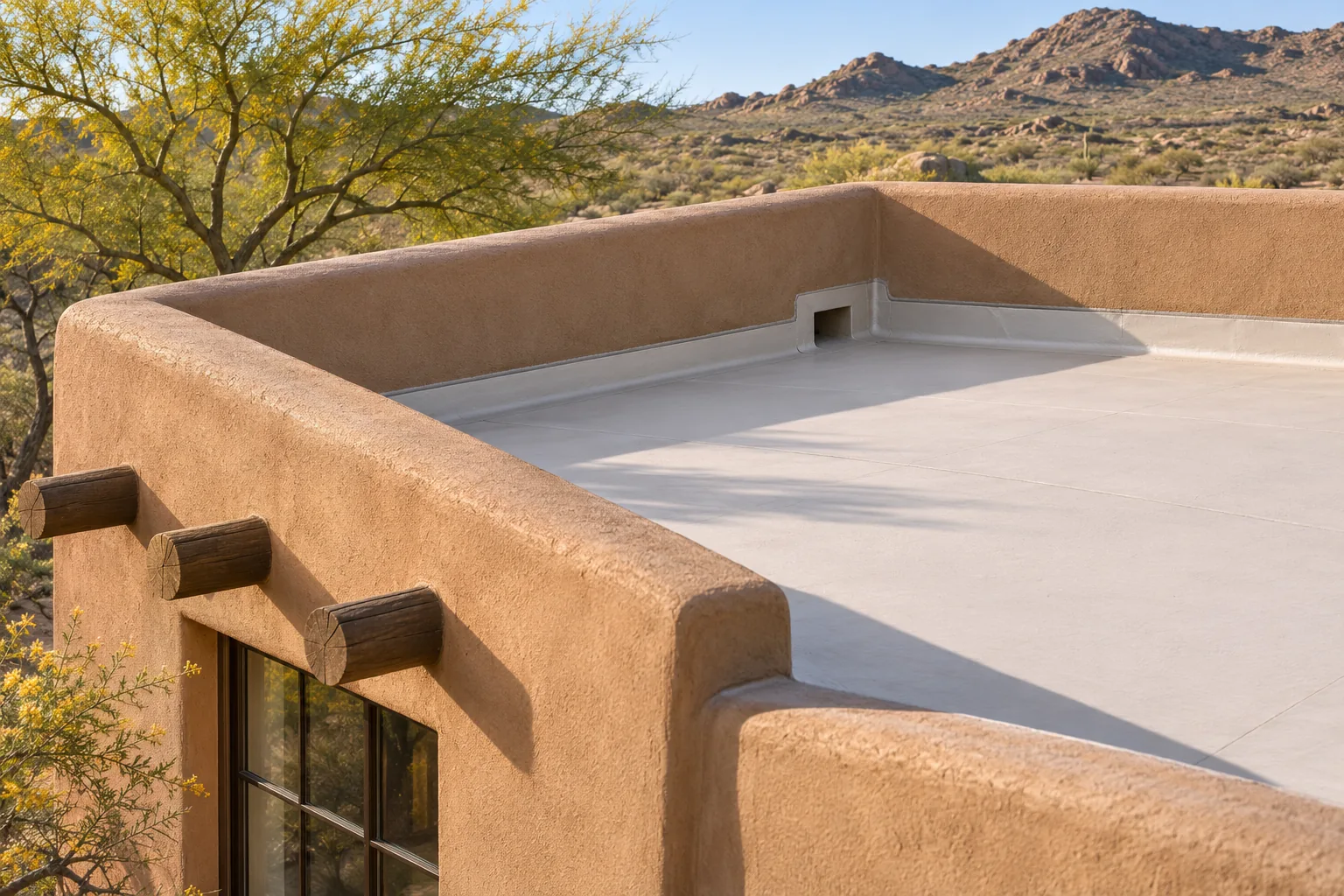
Pale low-slope residential desert roof bordered by a smooth stucco parapet wall and drainage scupper.
Patio tie-ins & territorial homes
SPF foam · Silicone · 2-ply SBSDrainage & scupper critical

Low-slope, foam & parapet roofs

Flat patio tie-ins and territorial parapet roofs depend on clear scupper drainage and continuous elastomeric or modified-bitumen membranes. Coating over trapped moisture only seals a wet roof deck inside.

Questions to ask on a low-slope bid
  • Was the existing foam or membrane moisture-probed before recommending a recoat vs. full replacement?
  • How are ponding low spots, parapet wall terminations, and scupper outlets reinforced with fabric and flashing?
  • Is the topcoat high-solids silicone (for ponding tolerance) or acrylic elastomeric, and what dry mil thickness is specified?
  • What routine recoat maintenance interval does the finish require under Arizona sun?

02 · Structural cross-section

Six layers that keep
monsoon water outside.

When a contractor cuts corners to deliver the lowest price, the savings almost always come out of Layers 02 through 04—the hidden waterproof layers sealed underneath your tile or shingles.

  1. 01

    Structural deck & sheathing

    CDX plywood or OSB decking screwed/nailed to roof trusses. Water stains around valleys or eaves often hide delaminated sheets that must be photographed and swapped before dry-in.

  2. 02

    High-temp underlayment barrier

    The primary waterproof membrane on every Arizona tile roof. Heat-rated SBS modified or double-layer 40-lb systems resist 150°F+ summer roof-cavity baking far longer than thin single-ply felt.

  3. 03

    Valley, eave & wall flashings

    Heavy-gauge W-profile valley channels, continuous drip edge, eave riser metal, headwall flashing, and UV-resistant pipe boots direct high-volume storm runoff away from joints.

  4. 04

    Treated battens & birdstop

    Horizontal 1x2 batten strips elevate tiles slightly for airflow and water shedding underneath, while eave birdstop blocks desert birds and wind-blown debris from nesting under barrel tiles.

  5. 05

    Primary tile or shingle courses

    Concrete/clay tiles or Class 3/4 architectural shingles shield the underlying membrane from direct Sonoran UV rays, hail impact, and wind-driven debris.

  6. 06

    Ridge course & ventilation

    The finishing ridge cap seals the highest spine of the home. Properly mortared or dry-vented ridge courses pair with open soffit intake vents to exhaust trapped summer attic heat.

April – June Pre-Monsoon Inspection Window

Ideal time to clear valley debris, check cracked pipe boots, inspect ridge mortar, and verify low-slope scuppers before July storms arrive.

July – September Monsoon Microburst Watch

High-wind rain exposes aged 20-year tile underlayment and loose ridge tiles. Crews operate dawn shifts (5:00 AM starts) to avoid 110°F+ heat hazards.

October – March Prime Full-Replacement Season

Cooler deck temperatures allow predictable full tile lift-and-relays, shingle tear-offs, HOA approvals, and municipal inspections without storm backlogs.

03 · Interactive proposal scope auditor

Compare the work
behind the price.

Two written bids for the same Phoenix roof can sit $6,000 apart because one omits W-valley metal, permits, or hides per-sheet decking charges. Check off what appears in writing on up to two competing proposals below.

What comes off and what goes back?

Compare measured square counts, full tear-off and haul-away, named underlayment brand/plies, valley and pipe-boot flashing metal, and any work the bidder expects you to arrange separately (such as solar panel detach/reset).

What happens if hidden wood decking is damaged?

Require an exact per-sheet OSB/plywood rate and per-linear-foot fascia rate in the base contract—plus a written rule that no extra wood is billed without bare-deck photos and your approval first.

When are payments due & who pulls permits?

Tie every payment draw to a verifiable physical milestone (never 100% upfront). Confirm the bidder's active AZ ROC number, who pulls required municipal permits, and that Arizona's 3-business-day cancellation notice is attached.

What records will I own at handover?

Ask for bare-deck and dry-in photos, final permit sign-off, manufacturer material warranty registration, the contractor's separate workmanship warranty, and statutory supplier/subcontractor lien waivers.

12-Point Arizona Scope Matrix

Bid A vs. Bid B completeness check

Bid A written scope 0 / 12 Check items present in writing
Bid B written scope 0 / 12 Check items present in writing
Critical written scope item Bid A Bid B
01. Active AZ ROC # verifiedR-42 or CR-42 license printed on proposal & verified on roc.az.gov
02. Measured squares & full tear-offRoof area, old underlayment/shingle removal & dumpster haul-away included
03. Named underlayment specExact brand, weight/plies & desert heat rating (not vague "standard felt")
04. New valley, drip & pipe flashingsNew 26ga W-valley metal, eave drip edge, wall flashings & new pipe boots
05. Tile match / 6-nail shingle specReplacement tile breakage allowance & battens, or 6-nail wind pattern
06. Upfront wood decking unit rateFixed $/sheet OSB/plywood & $/lf fascia rate printed before tear-off
07. Photo-backed Change Order ruleWritten homeowner sign-off required before extra wood repairs proceed
08. Municipal permit & inspectionsNames local city AHJ and clarifies who pulls permits & schedules inspections
09. Site protection & magnet sweepAC unit/pool/landscaping shielding and rolling magnetic nail sweep
10. Milestone draws & 3-day noticeMilestone-tied payments + statutory Arizona 3-day cancellation form
11. Separate material & labor warrantiesDistinguishes manufacturer coverage from contractor workmanship term
12. Photo dossier & lien waiversBare-deck/dry-in photo record plus statutory supplier/sub lien waivers
Check items above to spot missing scope lines on Bid A or Bid B. Your comparison automatically attaches to your printable/downloadable notes below.

100% browser-local tool · Zero data transmitted or stored · Include in visit worksheet ↓

04 · Before a contractor arrives

Bring sharper
roof notes.

Record what you have observed safely from the ground or indoors. Export a clean plain-text dossier or print sheet—automatically bundled with any Bid A vs. Bid B scope items you audited above—to hand to any licensed contractor of your choice.

Privacy guarantee: Everything stays strictly inside this browser tab. Leave out personal names, street addresses, and insurance policy numbers.

Download blank 12-point checklist (.txt)
Homeowner inspection worksheet
What brought your roof to your attention?

Architectural residential roof blueprints, terracotta tile sample, charcoal high-temperature underlayment swatch, metal flashing profile, brass tape measure, and field clipboard on a sunlit oak table.
Standardized estimating & material verification kit — illustrative architectural study.

Our future jobsite standard

4 mandatory homeowner photo checkpoints

  1. 01 · Pre-Work & Attic: Document existing tile profile, valleys, penetrations, and interior stains before staging.
  2. 02 · Bare Deck Audit: Photograph stripped wood sheathing before laying membrane; no hidden wood billed without photo sign-off.
  3. 03 · Dry-In & Flashing: Verify W-valley metal, high-temp underlayment, pipe boots, and battens before tiles cover them.
  4. 04 · Handover Dossier: Final ridge inspection, dual-pass magnet sweep, permit card, warranties, and statutory lien waivers.

05 · Path to live Arizona operations

Built to operate cleanly
from Job #1.

Ridgecourse Roofing is being assembled inside Summit Hill Holdings with full estimating standards, safety rules, and documentation controls before opening homeowner intake—never cutting legal or licensing corners.

  1. Complete
    Gate 1 · Brand clearance & field manual

    Cleared Ridgecourse Roofing for zero Arizona/national contractor collision and published the Phoenix Homeowner Field Manual & Scope Auditor.

  2. Complete
    Gate 2 · Operating, safety & estimating playbooks

    Completed 10-stage job SOP, 12-point scope standard, ADOSH extreme-heat & fall safety protocol, supplier onboarding, and attorney-review contract templates.

  3. In progress
    Gate 3 · Entity, Qualifying Party & AZ ROC R-42 / CR-42

    Forming standalone contracting LLC, engaging an experienced Arizona ROC Qualifying Party (4+ years verified roofing trade leadership), and binding surety bond, Recovery Fund, $1M/$2M CGL, and Workers’ Comp.

  4. Opens upon licensure
    Gate 4 · Live East Valley inspections & pilot jobs

    Active AZ ROC license number published on this site, opening supervised residential tile lift-and-relay, shingle, and low-slope projects across Maricopa County.

Qualifying Parties, master roofers & trade suppliers

Are you an experienced Arizona residential roofing superintendent, R-42/CR-42 Qualifying Party, or Phoenix supply partner who wants to build a clean, documentation-first operator with Summit Hill Holdings?

Connect with Summit Hill Holdings

Summit Hill Holdings

General & partner
inquiries.

For questions about the Phoenix homeowner guide, Qualifying Party opportunities, or wholesale/trade partnerships, contact the Summit Hill Holdings studio. Roofing inspections, estimates, and construction services are not available prior to active AZ ROC licensure.